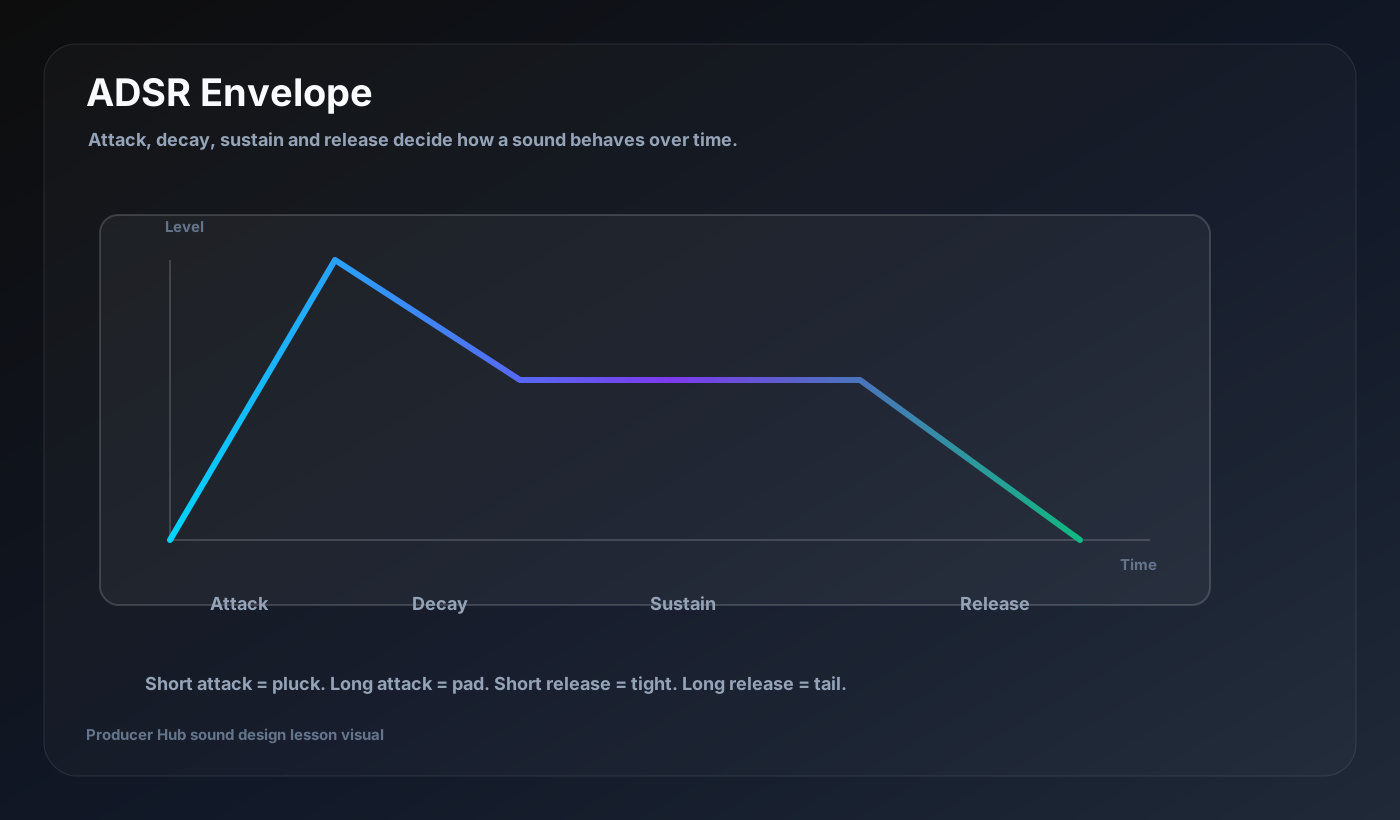
ADSR is one of the most important parts of synthesis because it controls how a sound behaves over time. The same oscillator can become a bass, pad, pluck or riser just by changing the envelope.
Attack
Attack is how long the sound takes to reach full level. A short attack feels immediate and punchy. A long attack fades in and feels soft, emotional or atmospheric.
Use short attack for bass, plucks, leads and drums. Use longer attack for pads, swells, reverse-style sounds and background movement.
Decay
Decay is how long the sound takes to fall from its peak to the sustain level. It creates the front shape of the sound after the initial hit. Short decay creates a tight pluck. Longer decay gives a more open body.
Filter decay is especially important for plucks. The volume can stay fairly controlled while the filter quickly opens and closes, creating snap without huge level jumps.
Sustain
Sustain is not a time control; it is the level held while the note is still pressed. High sustain makes a sound hold. Low sustain makes it drop away after the attack and decay.
Pads usually use high sustain. Plucks use low sustain. Bass can use either depending on whether the part is short and bouncy or long and held.
Release
Release is how long the sound continues after the note ends. Short release is tight and clean. Long release creates tails, atmosphere and overlap.
Long release can be beautiful, but it can also blur chords and muddy the mix. Check release while the full track plays, not in solo.
Amp envelope versus filter envelope
The amp envelope controls loudness over time. The filter envelope controls brightness over time. A classic pluck often has a short amp envelope and a short filter envelope. A pad often has a slow amp attack and subtle filter movement.
Once you understand this split, synth patches become much easier to diagnose. If the timing is wrong, adjust amp ADSR. If the brightness movement is wrong, adjust filter ADSR.
Turn this into a patch-building drill
Open your DAW, build the patch from a blank synth, then save the result with a job-based name. The goal is not to copy settings blindly; it is to understand why every stage exists.
- Short attack for punch.
- Long attack for pads.
- Low sustain for plucks.
- Release must fit the tempo.
- Use separate amp and filter envelopes.