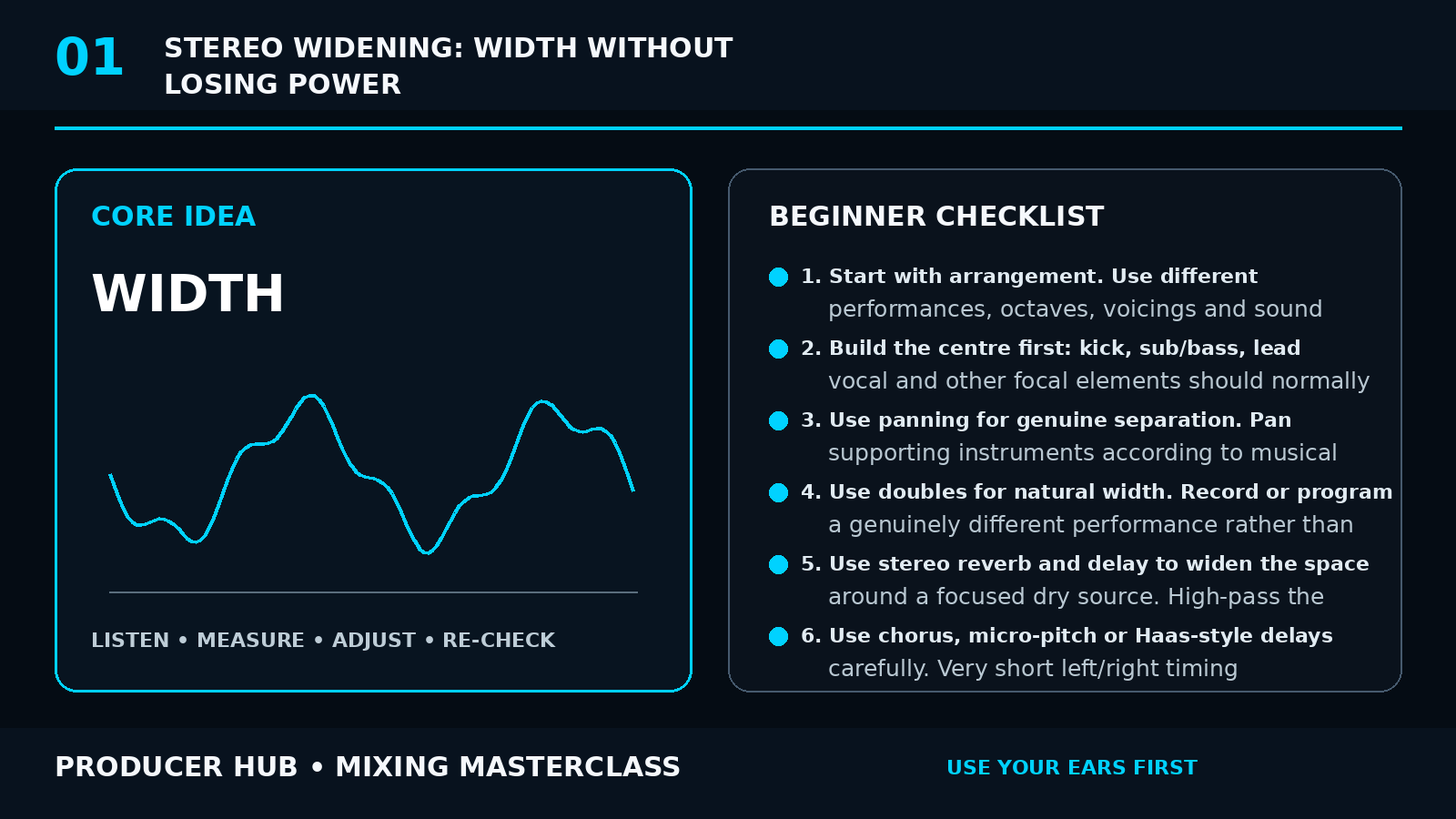
The Core Concept
Stereo width is the perceived distance between left and right information. A sound can feel wide because the two channels contain different timing, level, pitch, tone or ambience information.
Width is strongest when it has contrast. If every sound is spread to the edges, the listener loses a clear centre and the mix can feel smaller rather than larger.
Low frequencies usually benefit from a stable centre because kick and sub energy carries much of the physical impact of a mix.
Step-by-Step Tutorial
- Start with arrangement. Use different performances, octaves, voicings and sound choices before reaching for a widener.
- Build the centre first: kick, sub/bass, lead vocal and other focal elements should normally have a strong mono component.
- Use panning for genuine separation. Pan supporting instruments according to musical importance and density.
- Use doubles for natural width. Record or program a genuinely different performance rather than copying the same file.
- Use stereo reverb and delay to widen the space around a focused dry source. High-pass the effects return when necessary so the low end stays clean.
- Use chorus, micro-pitch or Haas-style delays carefully. Very short left/right timing differences can create comb filtering when summed to mono.
- If using Mid/Side EQ, make small moves. Remove unnecessary low-frequency Side energy and add Side presence only where it helps.
- Automate width for contrast: narrower verses can make choruses feel dramatically wider without increasing loudness.
- Check mono regularly. Listen for disappearing layers, hollow tone, reduced punch or dramatic level changes.
- Use a correlation meter as a warning system, not a target. Persistent negative correlation deserves investigation.
Common Mistakes
- Putting a stereo widener on the master by default
- Widening sub-bass or kick without checking mono
- Duplicating a mono track and panning copies left/right with no difference
- Using Haas delays on essential lead elements
- Judging width only on headphones
Guided Practice
Take a finished chorus. Bypass every widening plug-in. Rebuild the image using only panning, doubles and stereo effects. Then reintroduce widening one element at a time while checking mono after each move.
Turn this lesson into a 20-minute mix drill
Duplicate
Save a copy of the session before changing the mix.
Solo less
Make every move while the main groove or vocal context is playing.
Level match
Bypass the change at equal loudness so louder does not trick you.
Export
Print a short before/after bounce and listen away from the DAW.