The Core Concept
2-bus processing affects the entire mix, so small changes can be powerful. It is not automatically required.
If the balance, EQ and arrangement are still changing substantially, heavy master processing can make you chase a moving target.
The best reason to use 2-bus processing is a clear sonic goal that improves the song at matched loudness.
Step-by-Step Tutorial
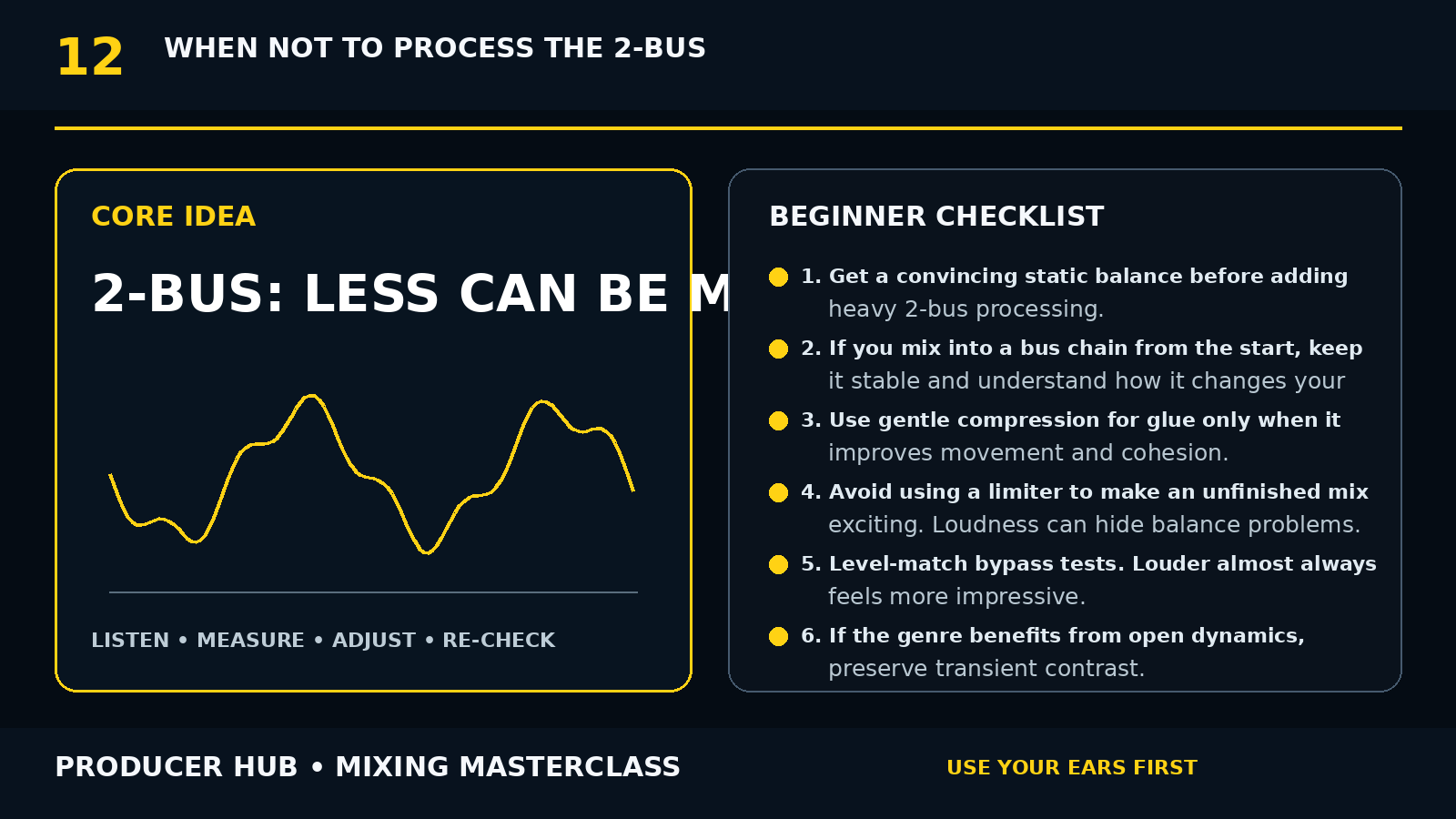
- Get a convincing static balance before adding heavy 2-bus processing.
- If you mix into a bus chain from the start, keep it stable and understand how it changes your decisions.
- Use gentle compression for glue only when it improves movement and cohesion.
- Avoid using a limiter to make an unfinished mix exciting. Loudness can hide balance problems.
- Level-match bypass tests. Louder almost always feels more impressive.
- If the genre benefits from open dynamics, preserve transient contrast.
- Fix obvious tonal problems at the source before applying broad master EQ.
- Watch gain staging into nonlinear processors.
- Leave sufficient headroom for the mastering stage if someone else will master the track.
- Print a version with and without optional 2-bus processing when collaboration requires flexibility.
Common Mistakes
- Adding a chain because professionals use one
- Judging bypass without level matching
- Using master compression to fix one loud instrument
- Limiting heavily during early balancing
- Changing the bus chain constantly
Guided Practice
Mix a verse and chorus with the 2-bus chain bypassed. Then add only one processor at a time and level-match. Keep only processors whose benefit you can describe clearly.
Turn this lesson into a 20-minute mix drill
Duplicate
Save a copy of the session before changing the mix.
Solo less
Make every move while the main groove or vocal context is playing.
Level match
Bypass the change at equal loudness so louder does not trick you.
Export
Print a short before/after bounce and listen away from the DAW.