Buying note: Prices mentioned are indicative, not live quotes. Check the retailer for today’s UK price, VAT, availability and delivery. Producer Hub is an editorial affiliate site, not the seller. How affiliate links work.
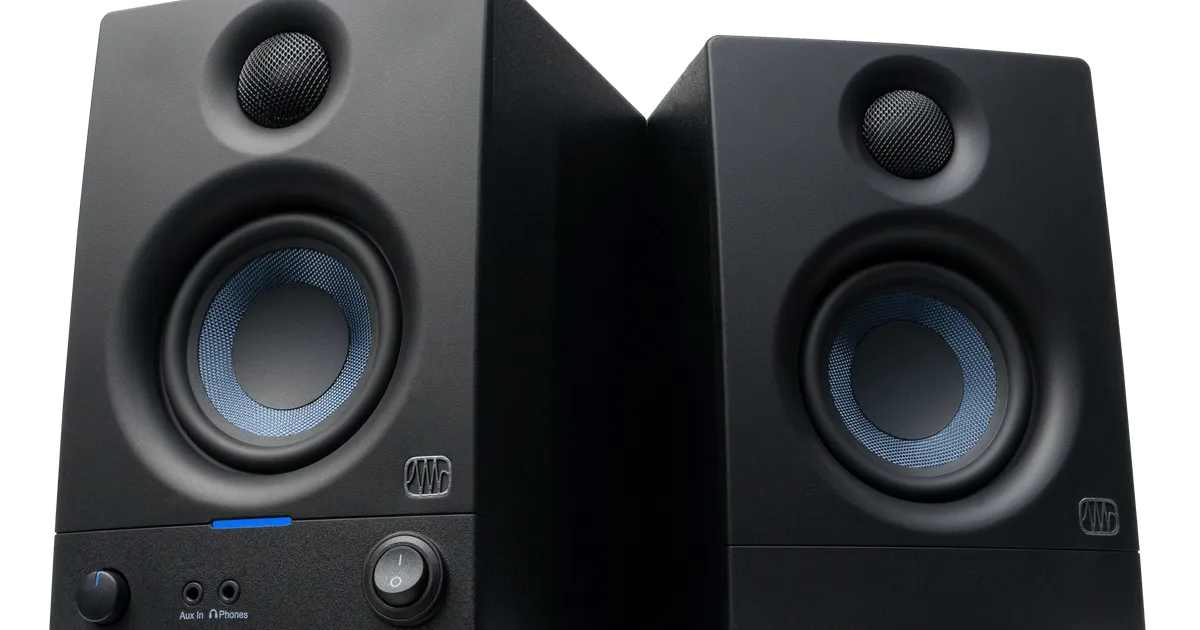
← Back to GearAn affordable studio monitor pair with acoustic tuning controls — the PreSonus Eris E3.5 offers entry-level performance with practical EQ flexibility at a beginner-friendly price.
Producer Hub checks official manufacturer specs, current UK pricing, DAW compatibility and real bedroom-studio use cases before recommending gear. This is an editorial review unless the page clearly states hands-on testing. Ratings are editorial scores, not paid placement. Affiliate links may earn a commission at no extra cost to you.
| Woofer | 3.5" woofer |
| Tweeter | 1" ultra-low-mass tweeter |
| Frequency Response | 80Hz–20kHz |
| Max SPL | 100dB (pair) |
| Amplifier | 50W (pair total) |
| Connections | 1/4" TRS, RCA, 1/8" aux |
| Acoustic Tuning | HF and LF EQ controls |
At 80Hz–20kHz, the Eris E3.5 covers useful midrange and treble without extending into sub-bass. For monitoring vocals, acoustic instruments, and melodic content, it performs adequately. Any mix decisions about sub-bass need checking on a system with real bass reproduction.
Rear-panel HF (±6dB) and LF (±6dB) knobs allow basic room correction. Most competing products at this price offer no room correction at all. These controls provide meaningful flexibility for different placement scenarios.
1/4" TRS balanced, RCA unbalanced, and 1/8" stereo aux inputs. The front-panel aux input is convenient for quickly plugging in a phone to check mix translation on a consumer-style system.
Beginners who need studio monitors on the tightest possible budget. A legitimate step up from consumer desktop speakers. Serious production work will require a significant upgrade.
Buy the Eris E3.5 only as a first, desktop-sized pair where the budget is tight and low end is not the point. They are better than consumer speakers but not serious mixing monitors — the 3.5-inch drivers simply run out of low end. Treat them as a stepping stone; if you are even slightly serious about mixing, go straight to a 5-inch pair like the HS5 or T5V.