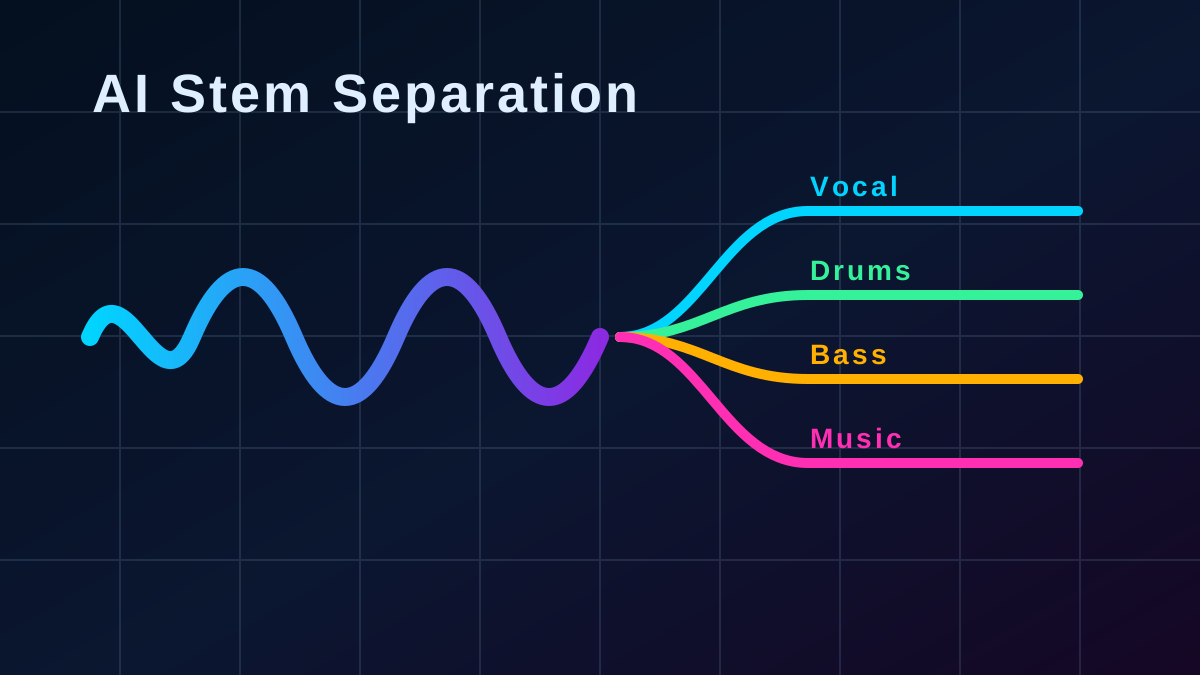
Stem separation
Useful for remix prep, reference study, acapella practice, drum analysis and cleaning old ideas. Always check artifacts and rights before release.
AI is moving into stem separation, sample search, mastering, arrangement help, vocal cleanup and idea generation. The professional question is not whether to use it. The question is where it helps the track, what rights come with the output, and whether it improves your decisions.
The best AI tools act like assistants: they speed up repetitive decisions, reveal options and help you hear problems. They do not replace taste, arrangement or finishing discipline.
Useful for remix prep, reference study, acapella practice, drum analysis and cleaning old ideas. Always check artifacts and rights before release.

Audio-aware search can cut browsing time by matching mood, key, tempo, timbre or instrument role.
Good for demos, loudness checks and problem hints. Bad if they hide poor balance, harsh highs or weak low-end decisions.
Use prompts for mood boards, chord directions, lyric sketches or arrangement prompts, then rebuild the musical decisions yourself.
Write down the problem before opening a tool: cleaner vocal, missing texture, weak master, reference analysis or remix prep.
Do not ask one tool to write, arrange, mix and master. Use it to solve a specific bottleneck.
Keep, delete, rewrite, resample, mute and arrange. The taste step is where the producer earns the result.
For serious releases, note which tools were used, what material went in, and what rights the platform grants.
AI music news moves quickly. These are the areas that matter for producers rather than hype headlines.
DAW and plugin makers are moving stem tools closer to everyday remix prep, reference analysis and old-project cleanup.
Read Producer Hub analysisMusic generation is becoming part of larger creative platforms, which means producers need to watch export rights and workflow lock-in.
Read sourceText, image and video prompts becoming music inputs could make mood-board creation faster, but release rights still need careful reading.
Read sourceThe boring questions matter. They decide whether an AI-assisted idea can become a public release.
If you upload commercial tracks, vocals or samples into an AI tool, understand what the platform can do with the input and whether the use is allowed.
Check whether the generated output is cleared for commercial release, content ID, sync, sample packs or client work.
Stem tools can create phase smear, watery vocals, cymbal damage and low-end instability. Always check in mono and on headphones.
If a tool makes every decision, you do not learn arrangement, balance or sound selection. Use AI to move faster, not to avoid the reps.
Know whether the input and output are allowed for your intended release.
Listen for phase problems, smeared transients, damaged highs and low-end instability.
Rewrite, arrange, resample and mix so the track is not just a generated artifact.
Document tools, dates, settings and source material in case a collaborator, label or distributor asks later.