1. Flat response
A monitor that doesn't flatter the sound — it tells the truth. You want an even, uncoloured frequency response so your mix decisions translate everywhere.
Studio monitors are your window into what a mix actually sounds like. The right pair reveals problems before your listeners do — and the wrong pair hides them.
For a bedroom studio, a 5-inch nearfield monitor with solid low-end extension (roughly 45–55 Hz) and a flat, uncoloured response is the sweet spot. Yamaha HS5, KRK Rokit 5, Adam T5V and Focal Alpha 50 are the trusted starting points. Pick based on your room size and the music you make — bigger is not better in a small room.
A good monitor purchase comes down to four things, in this order:
A monitor that doesn't flatter the sound — it tells the truth. You want an even, uncoloured frequency response so your mix decisions translate everywhere.
A 5-inch cone in a small bedroom is accurate. An 8-inch cone in that same room exaggerates bass and misleads you. Match driver size to room size first.
Look at the -3 dB bass extension, not just "it has bass." A spec of 43 Hz beat 53 Hz if you mix bass-heavy music. Honest low end beats loud low end.
Room-control switches (low-shelf/high-shelf trim) matter more than flashing extras — they let you correct a slightly boomy or bright room.
Active (powered) monitors are plug-and-play: each has a built-in amplifier, so you run an audio cable straight from your interface to each speaker and plug in power. No external amp to match, no speaker cable to strip.
The setup steps that matter, in order:
Make an equilateral triangle with your head — tweeters at ear height, monitors toed in toward you, a little off the wall.
Set both monitors to the same volume trim. Uneven trim = a skewed stereo image you'll fight all session.
Use the monitor's low-shelf/high-shelf trim to tame obvious boom or harshness from your room.
One of the most revealing tests: a good mix still works collapsed to mono.
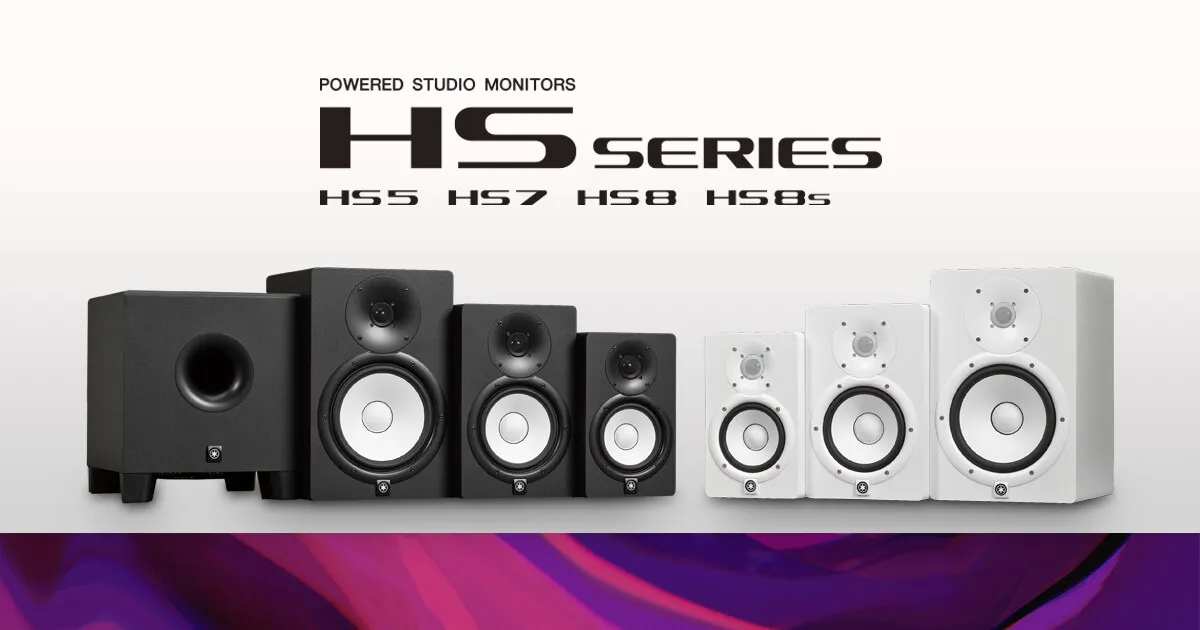
Flat, honest and unforgiving — the classic reference. Brilliant for learning to trust what you hear.
Full review →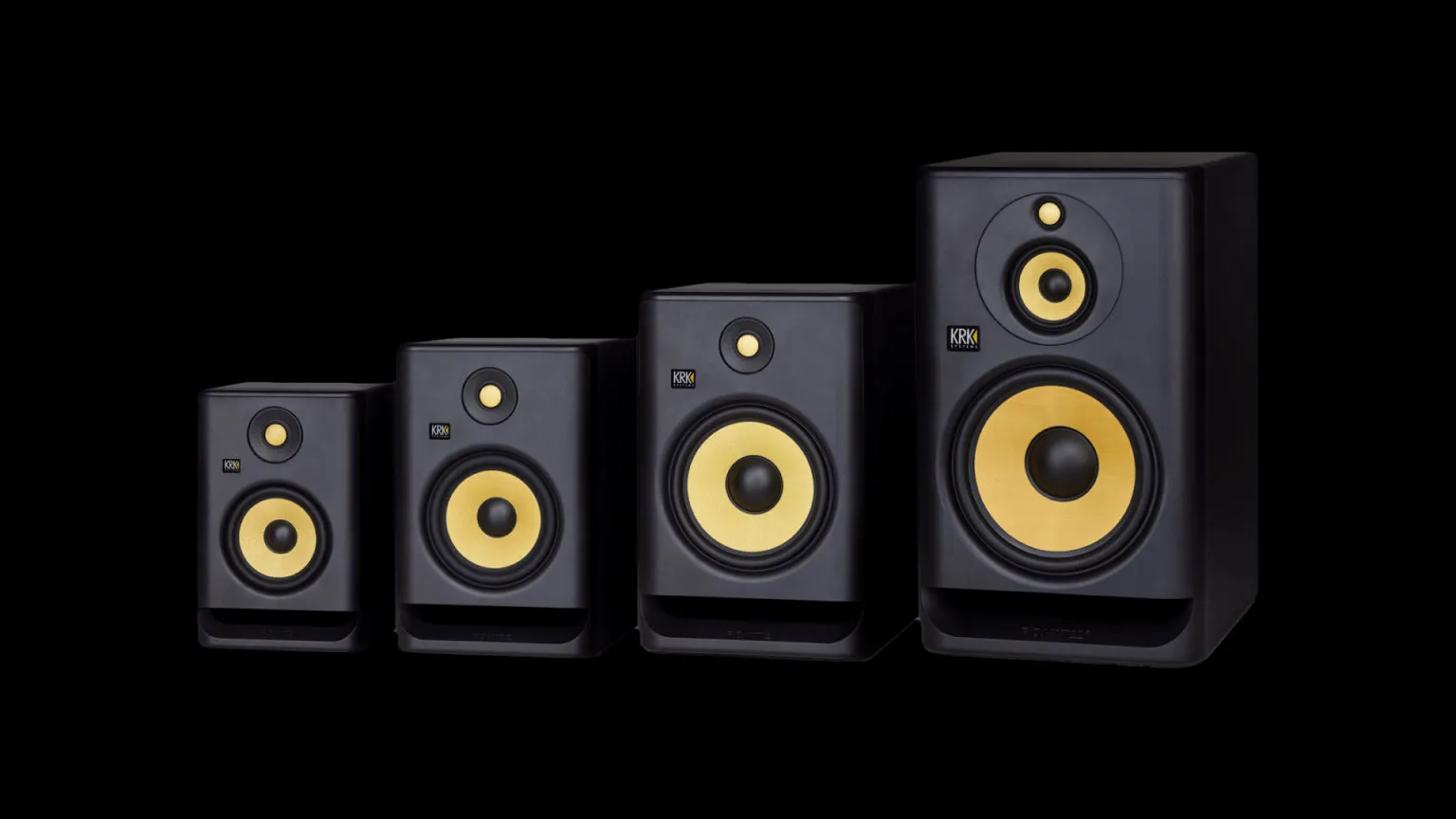
Forward and punchy with built-in DSP room correction. Great for electronic and hip-hop producers.
Full review →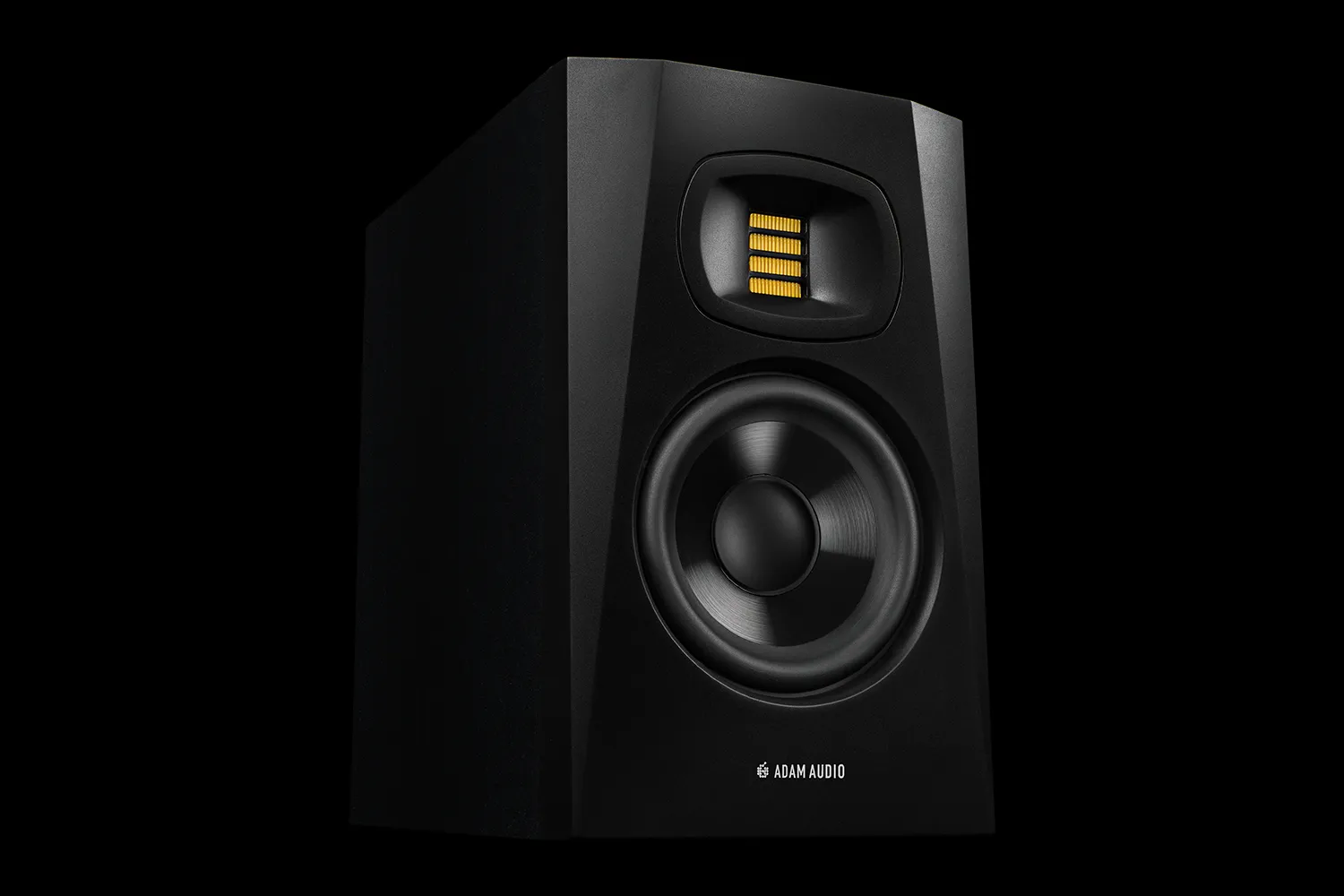
The ribbon tweeter gives a detailed, open top end — excellent value and a favourite of mixing engineers.
Full review →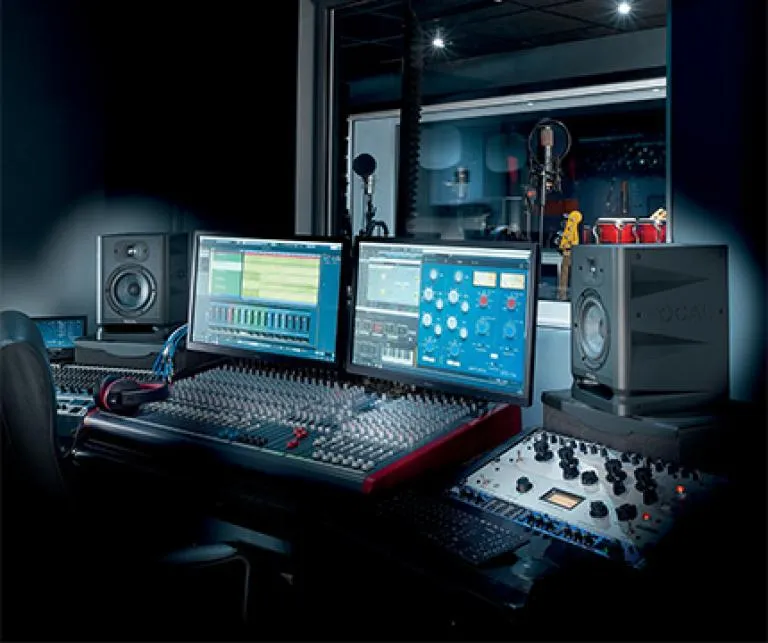
Natural, neutral and easy to mix on for hours. A step up in build and clarity.
Full review →Pros: Extremely flat and revealing; honest midrange; built to last.
Cons: Light on sub-bass; unforgiving on a bad mix (which is the point).
Best for: Producers learning to trust their ears and find problems.
Pros: Punchy, exciting low end; DSP room correction; front-firing bass port.
Cons: Slightly less flat than HS5; bass can flatter until you learn it.
Best for: Electronic, hip-hop and bass-heavy producers.
Pros: Detailed ribbon-tweeter highs; clear imaging; excellent value.
Cons: Slightly forward top end may need HF trim in bright rooms.
Best for: Detailed mixing, sound design and vocal work.
Pros: Natural, neutral balance; low-fatigue; premium build.
Cons: Higher price; still a 5-inch monitor (sub needs care).
Best for: Long mixing sessions and a refined, honest reference.
Mackie CR, Presonus Eris — a real step up from hi-fi, good for the first studio monitor purchase.
Yamaha HS5, KRK Rokit 5, Adam T5V — the sweet spot most bedroom producers stay in.
Focal Alpha, Genelec 8010, Adam T7V — more accuracy, more low end, more detail.
Here's how a real mix session flows when your monitors are set up correctly:
Play a commercial track you know well at a comfortable volume. This "calibrates" your ears to the monitors.
Set instrument levels — your monitors reveal clashes and masking that headphones hide.
Clean the low end and find harshness — this is where flat, honest monitors earn their keep.
Mono-check, then switch to headphones, then back. A mix that survives all three is close to done.
5-inch for small bedrooms, 6.5–7 inch for medium rooms, 8-inch for larger or treated rooms. Match driver size to room, not ambition.
Not at first. Accurate 5–7 inch monitors are the better first purchase; add a sub later only for heavy bass in a suitable room.
They're honest rather than flattering, so they sound less "exciting" than hi-fi — but that honesty is exactly what makes mixing accurate.